 hezblog
County Population Growth Slows as Immigration Drops in 2026
County population growth immigration trends are shifting significantly across the United States in 2026. New data shows that population growth is slowing in most counties, largely due to a sharp decline in international migration.
Population Growth Slows Nationwide
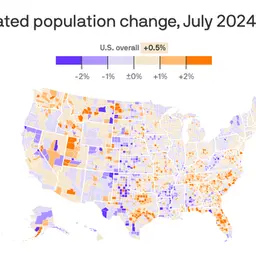
According to recent U.S. Census data, the country’s population grew by just 0.5% between 2024 and 2025. This marks a noticeable slowdown compared to the previous year, when growth reached 1%.
A major reason for this decline is the drop in immigration. International migration fell dramatically—from about 2.8 million people to 1.3 million in just one year.
As a result, many counties that typically rely on new arrivals to boost population are now seeing slower growth or even declines.
Impact on Major Counties
The effects of changing county population growth immigration patterns are most visible in large urban areas. These regions usually depend on international migration to offset domestic population losses.
For example, Los Angeles County lost nearly 54,000 residents between 2024 and 2025. This reflects a broader trend where major population centers are struggling to maintain growth.
Experts explain that large counties often lose residents to other parts of the country. Immigration typically balances that loss. However, with fewer new arrivals, population growth is weakening or reversing.
Immigration’s Role in Growth
Immigration has long been a key driver of U.S. population growth. In recent years, it accounted for a large share of overall increases. Without it, growth slows significantly.
Now, international migration has declined in about 90% of U.S. counties.
This shift is reshaping demographic patterns. Counties that once expanded rapidly are now growing more slowly, while some are experiencing population declines.
Regional Differences
Not all areas are affected equally. Some smaller metro areas and regions in the Southeast continue to grow faster than others. Cities like Ocala, Myrtle Beach, and Spartanburg are among the fastest-growing areas.
These regions benefit more from domestic migration, which has helped offset the decline in international arrivals.
Long-Term Implications
The county population growth immigration trend has serious long-term implications. Slower population growth can impact the labor force, economic development, and infrastructure planning.
As birth rates remain low and deaths increase, immigration becomes even more important. Without it, many counties may struggle to maintain stable populations.
Final Thoughts
County population growth immigration trends highlight a major shift in U.S. demographics. With immigration declining sharply, population growth is slowing across much of the country.
If this trend continues, policymakers may face increasing pressure to address immigration policies and find new ways to support economic growth and population stability.

 hezblog